Key Points
- 1Suspense in children's stories is a tool for safe emotional exploration and developing problem-solving skills, not just for thrills.
- 2Key techniques include imposing time limits (ticking clocks), strategic foreshadowing, careful pacing with cliffhangers, and using a limited character point-of-view.
- 3Creating relatable stakes and empathetic characters is crucial; children must care about the outcome to feel the suspense.
- 4Atmospheric settings and sensory details (e.g., dark forests, eerie sounds) build mood and unease before the plot action begins.
- 5The most critical balance is between thrill and safety, ensuring threats feel real but manageable within a framework of courage and hope.
- 6Successful suspense transforms young readers from passive listeners into active detectives, engaging their critical thinking.
The Art of the Edge-of-Your-Seat Tale: How Do Authors Create Suspense for Young Readers
What is it about a story that makes a child whisper, "Just one more chapter"? The answer often lies in a masterfully crafted element: suspense. For young readers, suspense isn't about horror or shock; it's the delicious tension of not knowing what happens next, the thrill of a puzzle unfolding, and the emotional investment in a character's journey. Creating effective suspense in children's literature is a nuanced art, requiring a delicate balance between excitement and emotional safety. Let's explore the powerful techniques authors use to keep young readers eagerly turning pages.
Why Suspense Matters in Children's Stories
Before diving into the "how," it's essential to understand the "why." Suspense is more than a narrative trick; it's a developmental tool. It teaches children to manage anticipation, cope with mild uncertainty, and develop problem-solving skills as they predict outcomes alongside the protagonist. A well-crafted suspenseful moment in a book provides a safe container for experiencing and processing emotions like worry, curiosity, and relief—a rehearsal for real-life challenges.
Core Techniques for Building Kid-Friendly Suspense
1. The Ticking Clock & Raising the Stakes
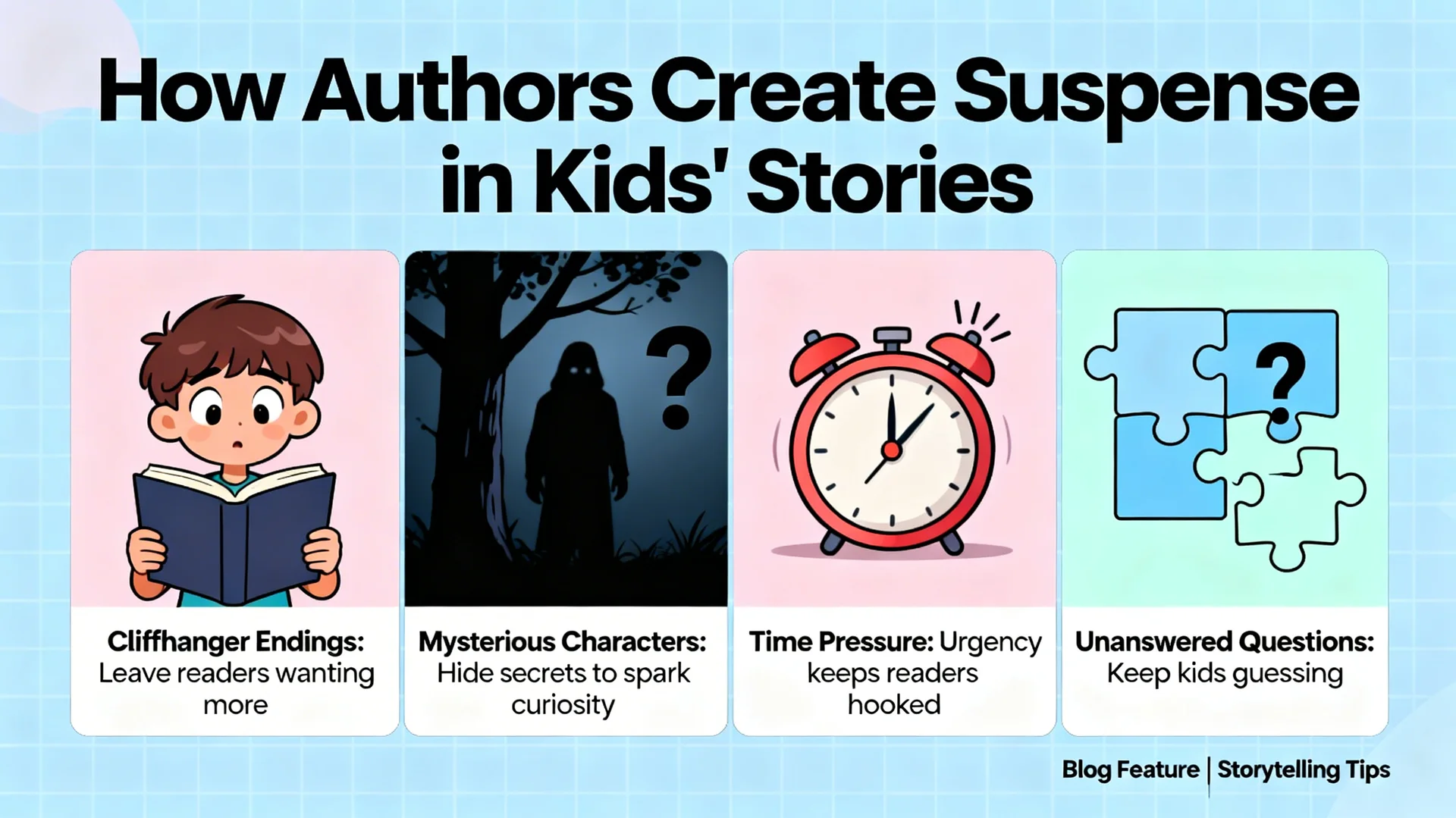
One of the most straightforward yet effective methods is imposing a deadline. Whether it's finding a lost pet before dark, solving a mystery before the school play, or stopping a villain before a magical spell becomes permanent, a time limit creates immediate, understandable pressure. Authors raise the stakes by making the consequences of failure clear and meaningful to the child character—and, by extension, to the young reader. The stakes must be relatable, like losing a friendship, failing a heartfelt mission, or a family member being disappointed.
2. Strategic Foreshadowing & Clues
Foreshadowing plants subtle seeds of what's to come. A strange noise in the attic, a cryptic remark from a secondary character, or an oddly out-of-place object can all create a sense of eerie anticipation. For children, these clues must be noticeable but not overly obvious. Successful foreshadowing makes the eventual payoff feel earned and satisfying, teaching readers to pay attention to details. It transforms them from passive listeners into active detectives within the story.
3. Pacing and Chapter Breaks (The Cliffhanger)
Pacing is the heartbeat of suspense. Authors alternate between moments of calm, where characters and relationships are developed, and bursts of action or revelation. Short, punchy sentences can speed up the heart rate during a chase scene. However, the masterstroke is often the chapter cliffhanger. Ending a chapter at a critical moment—"The door creaked open..."—exploits the natural break in reading, forcing a child to sit with the tension and making the urge to continue almost irresistible.
4. Relatable Character Dilemmas & Limited Knowledge
Suspense is deeply tied to empathy. If a reader cares about the character, they will feel the character's fear and anxiety. Authors create this bond by giving protagonists relatable desires, flaws, and loyalties. Furthermore, suspense is amplified by limited point-of-view. By seeing the story strictly through the child protagonist's eyes, the reader only knows what the character knows. They discover hidden dangers, secret motives, and plot twists simultaneously, creating a powerful, shared experience of surprise and discovery.
5. Atmospheric Setting & Sensory Details
A story's environment is a character in itself. A description of a dark, whispering forest, a deserted hallway at school, or a grandparent's strangely quiet house can set a mood of unease before anything plot-related happens. Using vivid sensory details—the chill in the air, the distant howl of the wind, the flickering of a light—immerses the child in the scene and builds atmospheric tension that foreshadows events.
The Delicate Balance: Thrill vs. Safety
This is the cornerstone of suspense for kids. The threat must feel real but ultimately manageable. The narrative should assure the reader that the protagonist is capable and that a caring resolution is possible. Darkness is often hinted at rather than explicitly shown. Authors like Neil Gaiman ("Coraline," "The Graveyard Book") and J.K. Rowling (the "Harry Potter" series) are experts at this. They present real dangers but always within a framework where courage, cleverness, friendship, and love are the ultimate weapons. The suspense comes from wondering how the hero will prevail, not if they will.
Examples from Beloved Children's Literature
- "Harry Potter and the Sorcerer's Stone" by J.K. Rowling: The suspense builds gradually from the mysterious letters arriving at Privet Drive to the final confrontation. Rowling uses limited third-person perspective (tight to Harry), a series of magical obstacles with a time limit, and the constant, lurking threat of Voldemort.
- "The Graveyard Book" by Neil Gaiman: The opening chapter is a masterpiece of suspense, establishing a dire threat. The entire novel is propelled by the question of when the man Jack will return, using the safe but eerie setting of the graveyard to create a unique balance of comfort and danger.
- "The Mysterious Benedict Society" by Trenton Lee Stewart: This book builds suspense through intellectual puzzles and tests. The tension is cerebral, as the child protagonists must use their wits to uncover a conspiracy, teaching readers that suspense can be found in a problem to be solved as much as in a monster to be faced.
The Lasting Impact of a Suspenseful Story
When done well, suspenseful stories do more than entertain. They build resilience, critical thinking, and emotional intelligence. They teach children that it's okay to feel scared or anxious, that these feelings can be navigated, and that challenges can be overcome with resourcefulness and help from others. The relieved satisfaction upon finishing a tense book is a powerful reward, reinforcing a positive association with reading and the conquering of fears.
In conclusion, creating suspense for children is a thoughtful craft. It employs relatable stakes, careful pacing, empathetic characters, and atmospheric detail—all while holding the reader's hand in the darkness, assuring them that the light is just a page turn away. It's this beautiful balance that creates not just eager readers, but thoughtful, brave, and engaged young minds.