Key Points
- 1Social Story for Hitting: A Free Printable Resource
- 2What is a No Hitting Social Story?
- 3Why Use a Social Story for Aggressive Behaviors?
- 4Free Printable: Hands Are Not for Hitting Story
- 5Read the Full 'I Have Gentle Hands' Social Story Online
No Hitting Social Story: Gentle Hands Guide
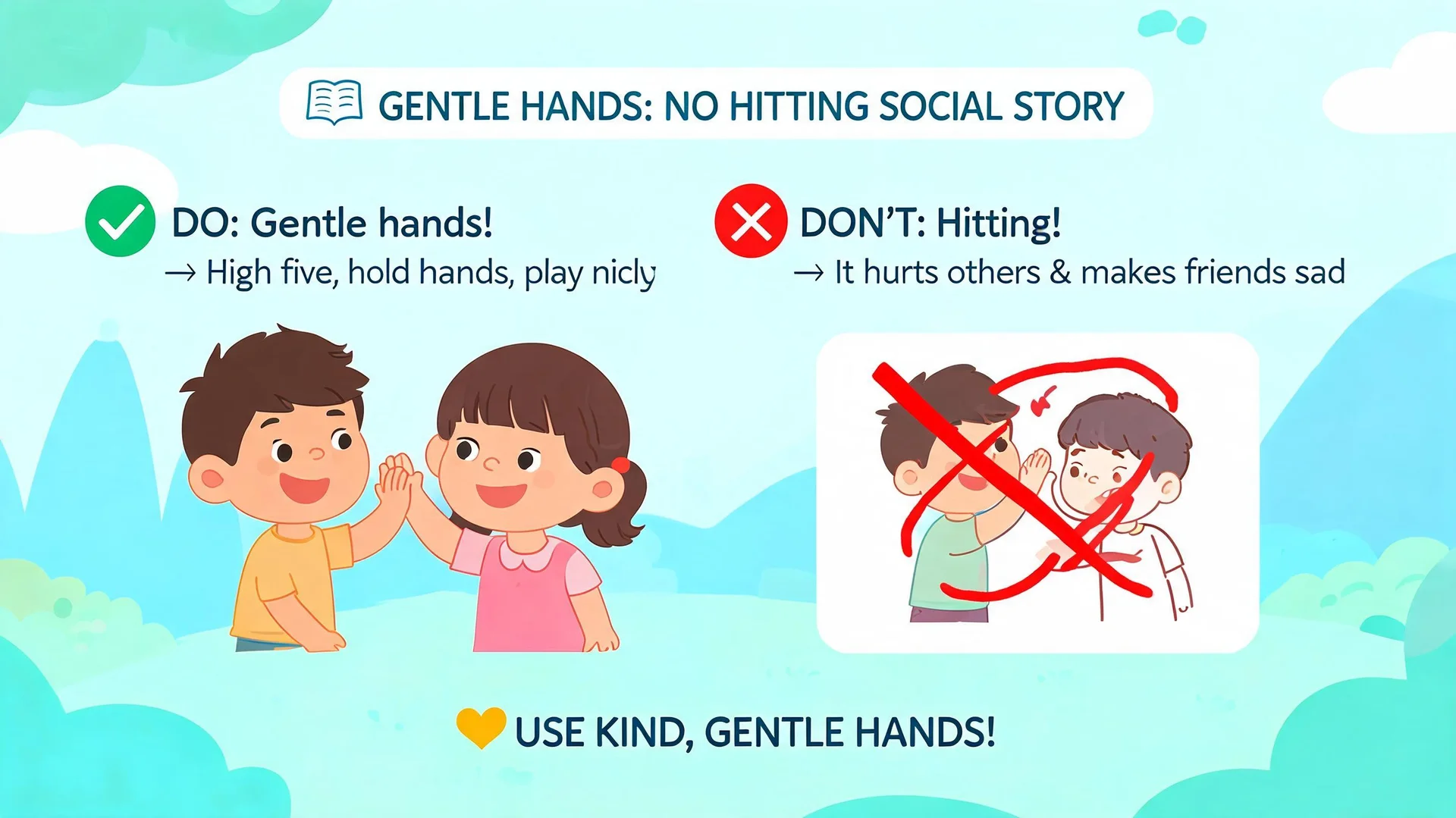
When a child struggles with aggressive behavior, a social story for hitting can be a transformative tool. Parents and teachers often seek a no hitting social story to help early learners and neurodivergent children understand what to do when they feel angry. By focusing on the concept that hands are not for hitting story resources emphasize positive alternatives and emotional regulation. This gentle hands story provides a free, printable intervention to guide children toward self-control and safe expressions of big feelings.
Social Story for Hitting: A Free Printable Resource

Image generated by AI.
What is a No Hitting Social Story?
A social story is a short, descriptive book or narrative that explains social situations and expected behaviors in a clear, reassuring way. For children who hit when frustrated, a story breaks down the situation into understandable parts. It explains what hitting is, why it is harmful, and what the child can do instead. Using first-person, affirmative language like 'I can keep my hands to myself,' these stories make abstract social rules concrete and actionable for young minds.
Why Use a Social Story for Aggressive Behaviors?
Aggressive behaviors often stem from an inability to communicate intense emotions. A social story for hitting addresses the root cause by validating the feeling while changing the behavior. Instead of just saying 'no,' it provides a framework for understanding personal space and emotional regulation. Research shows that combining narrative intervention with visual supports significantly reduces aggression in children with autism and other developmental needs, making these stories an essential tool for special educators and caregivers.
Free Printable: Hands Are Not for Hitting Story
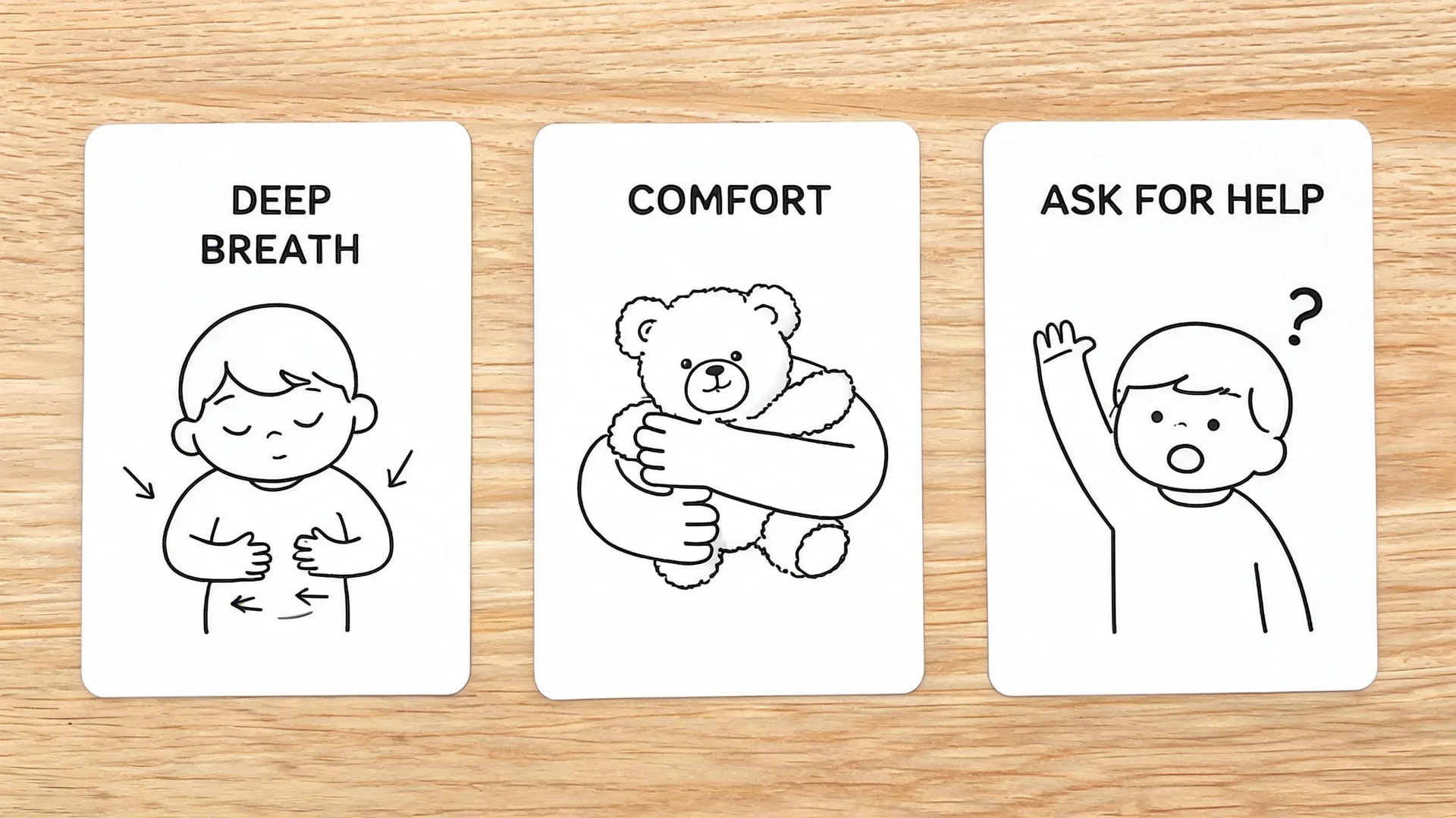
Image generated by AI.
Read the Full 'I Have Gentle Hands' Social Story Online
Here is a complete, readable text to read with your child. You can use this directly on your device or print it out using the link below.
Sometimes I feel angry or frustrated. That is okay. Everyone feels angry sometimes.
When I feel angry, my body might feel tight. I might want to hit.
But hitting is not okay. Hitting hurts my friends, my family, and my teachers. I do not want to hurt people I care about.
My hands are not for hitting. My hands are for gentle touches.
I can keep my hands to myself. I can use my words to say, 'I am mad!' or 'I need help!'
If I feel like I might hit, I can take deep breaths. I can stomp my feet. I can squeeze a soft toy.
I am learning to use gentle hands. I am proud of myself when I make safe choices.
Download the Free PDF and Visual Cue Cards
For immediate use, you can download the free printable PDF of this story, which includes accompanying visual cue cards. Having a physical copy allows children to hold the book, flip through the pages, and revisit the strategies whenever they feel overwhelmed. The visual cue cards can be cut out and placed on a keyring or taped to a desk as daily reminders.
Teaching Alternative Behaviors: What Can Hands Do?
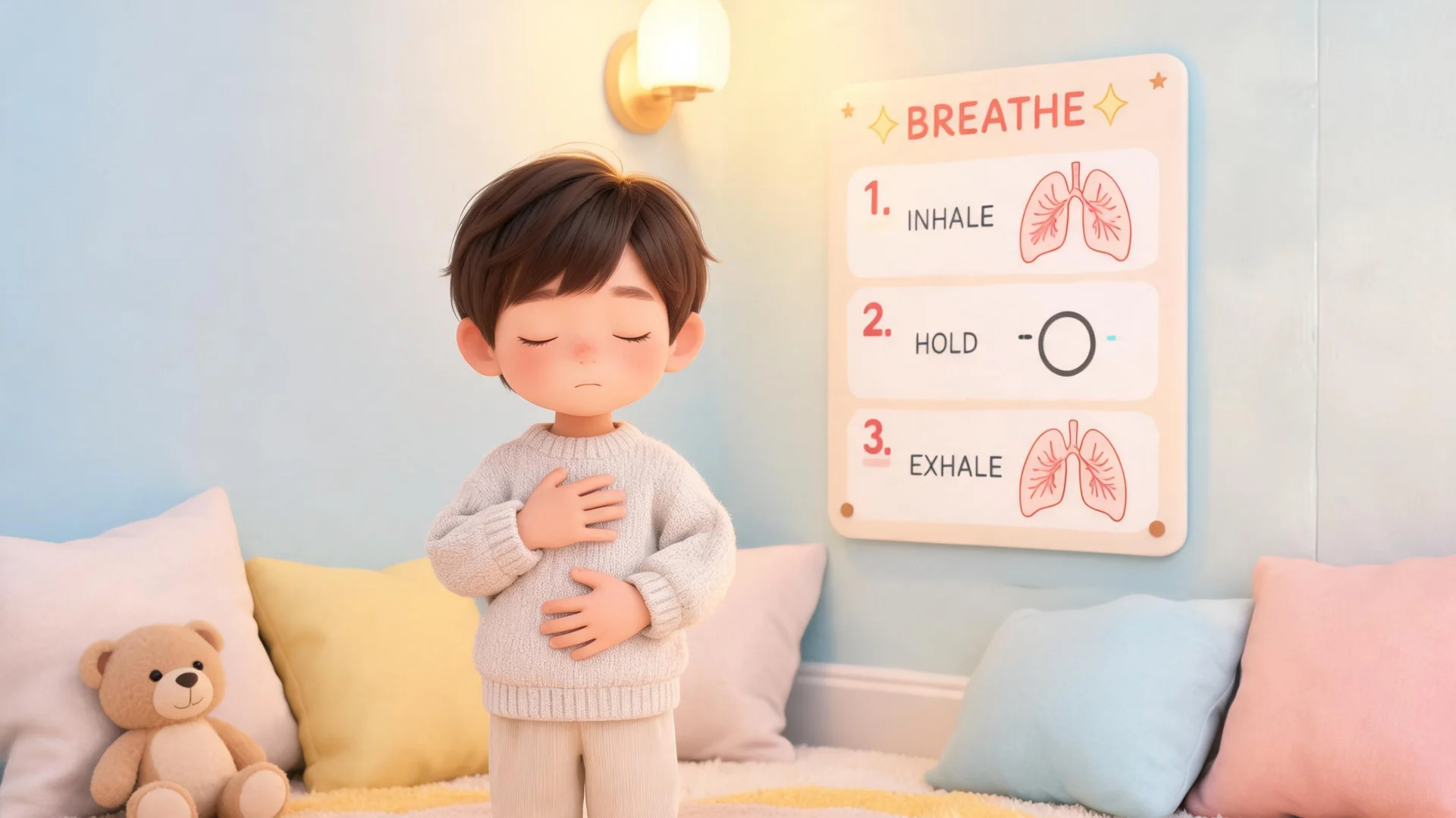
Image generated by AI.
Positive Actions: Hugging, Helping, and Playing
A core element of a hands are not for hitting story is shifting the focus from prohibition to positive action. Children need to know what they should do with their hands. Emphasize that hands are for wonderful things: hugging a parent, helping a friend clean up, building with blocks, and painting a picture. By reinforcing these positive alternatives, you help the child build a new mental image of what safe, appropriate touch looks like in their daily life.
Keeping Hands to Myself: Personal Space Rules
Understanding personal space is vital for early learners and neurodivergent children. Teach the concept of an invisible bubble around each person. Keeping hands to myself means my hands stay inside my bubble unless I am giving a gentle touch, like a high-five or a hug, with permission. Role-playing these personal space rules can make the abstract concept much more concrete and easier to remember in the moment.
How to Use This Social Story Effectively
Step-by-Step Implementation for Parents and Teachers
Reading the story once is not enough. Introduce it during a calm moment, not during a meltdown. Read it together daily, using a calm and supportive tone. Praise the child when they identify the alternative behaviors in the story. Consistency is key to helping the child internalize the message. Over time, you will notice the child recalling the story's strategies when they begin to feel frustrated.
Customizing the Story: Adding Names and Specific Triggers
Personalization greatly increases the efficacy of a social story. Insert the child's name into the narrative (e.g., 'Sometimes Sarah feels angry'). Add the specific triggers that lead to hitting, such as 'When someone takes my toy, I might feel like hitting.' This makes the story highly relevant to the child's real-life experiences. If you want to create a fully customized book tailored to your child's unique needs, you can create your own personalized story using our intuitive platform.
Reading the Story to Children with Autism
For children with autism, clear and simple language is essential. Use a flat, expressive, but calm tone. Point to the pictures and visual cues on each page. Allow the child to process the information at their own pace. Some children may benefit from acting out the alternative behaviors, like taking a deep breath or squeezing a sensory toy, immediately after reading the corresponding page.
Managing Anger: Coping Strategies Instead of Hitting
Identifying Frustration and Angry Feelings
Children often hit because they do not recognize the physical signs of anger. Teach them how to identify frustration early. Explain that a fast heartbeat, clenched fists, or a hot face are signs that their body is getting angry. Labeling these emotions helps the child build an emotional vocabulary, which is the first step in emotional regulation and reducing aggressive outbursts.
Using Deep Breaths, Safe Spaces, and Asking for Help
Equip the child with actionable coping strategies. Deep breathing calms the nervous system. Designating a safe space or a cool-down corner gives them a physical place to retreat when overwhelmed. Most importantly, teach them to ask for help from a trusted adult. Remind them that asking for help is a sign of strength, not weakness. Our library at ChildrenBooks.online offers a wide variety of stories focused on emotional regulation and social skills, providing caregivers with the tools they need to support every child's developmental journey. We make it easy to find high-quality, engaging materials that teach critical life lessons through the power of storytelling. Whether you are addressing hitting, sharing, or anxiety, our resources are designed by educators to be both effective and accessible.
Supporting the Social Story with Visual Cue Cards
How to Use Visual Reminders in the Classroom and Home
Visual cue cards are essential companions to the written narrative. Place a 'gentle hands' cue card near play areas, on the refrigerator, or on the child's desk. When you see the child becoming frustrated, silently point to the cue card instead of giving a verbal reprimand. This visual prompt helps the child recall the strategies from the story without escalating the situation with more verbal input.
Reinforcing the 'No Hitting' Message Throughout the Day
Consistency across environments ensures the lesson generalizes. Communicate with teachers, babysitters, and family members so everyone uses the same vocabulary, like 'gentle hands' and 'keep your hands to yourself.' When the child successfully uses a coping strategy instead of hitting, provide immediate positive reinforcement. Celebrating these small wins helps solidify the new, positive behavior patterns.