Key Points
- 1The Psychology of "Safe Scares": Why We Love Horror Stories for Childrens
- 2Choosing the Right Chill: From Scary Stories for 5 Year Olds to Ghost Stories for 10 Year Olds
- 3Setting the Scene: Spooky Bedtime Stories vs. Ghost Story to Tell at a Sleepover
- 4Lightening the Mood: The Charm of Funny Ghost Stories and Humorous Halloween Stories
- 5Beyond Reading: Creative Ghost Story Ideas and Horror Story Writing for Kids
- 6Conclusion: Making Memories with Children's Ghost Story Traditions
- 7**The Helpful Haunt:** A ghost who tries to help a kid find their lost homework but keeps making a mess.
- 8**The Midnight Snack:** A monster in the fridge who only wants to steal the leftover pizza.
- 9**The Echoing Library:** Books that whisper their stories when the lights go out.
Ghost Stories for Children: The Ultimate Spooky Guide
Finding the perfect ghost stories for kids is a magical balancing act between excitement and comfort. Whether you are searching for a classic children's ghost story to read aloud or short kid-friendly ghost stories for a summer campfire, these tales offer more than just a spooky ghost encounter. Engaging with kids' ghost stories helps young readers develop emotional resilience and imagination. From scary stories for kids that provide a gentle thrill to spooky stories for younger audiences, the world of horror stories for children is vast. In this guide, we explore how to choose the best scary story for kids, ensuring every session of children's spooky stories is both safe, thrilling, and memorable for your little ones.
The Psychology of "Safe Scares": Why Children Love Spooky Tales
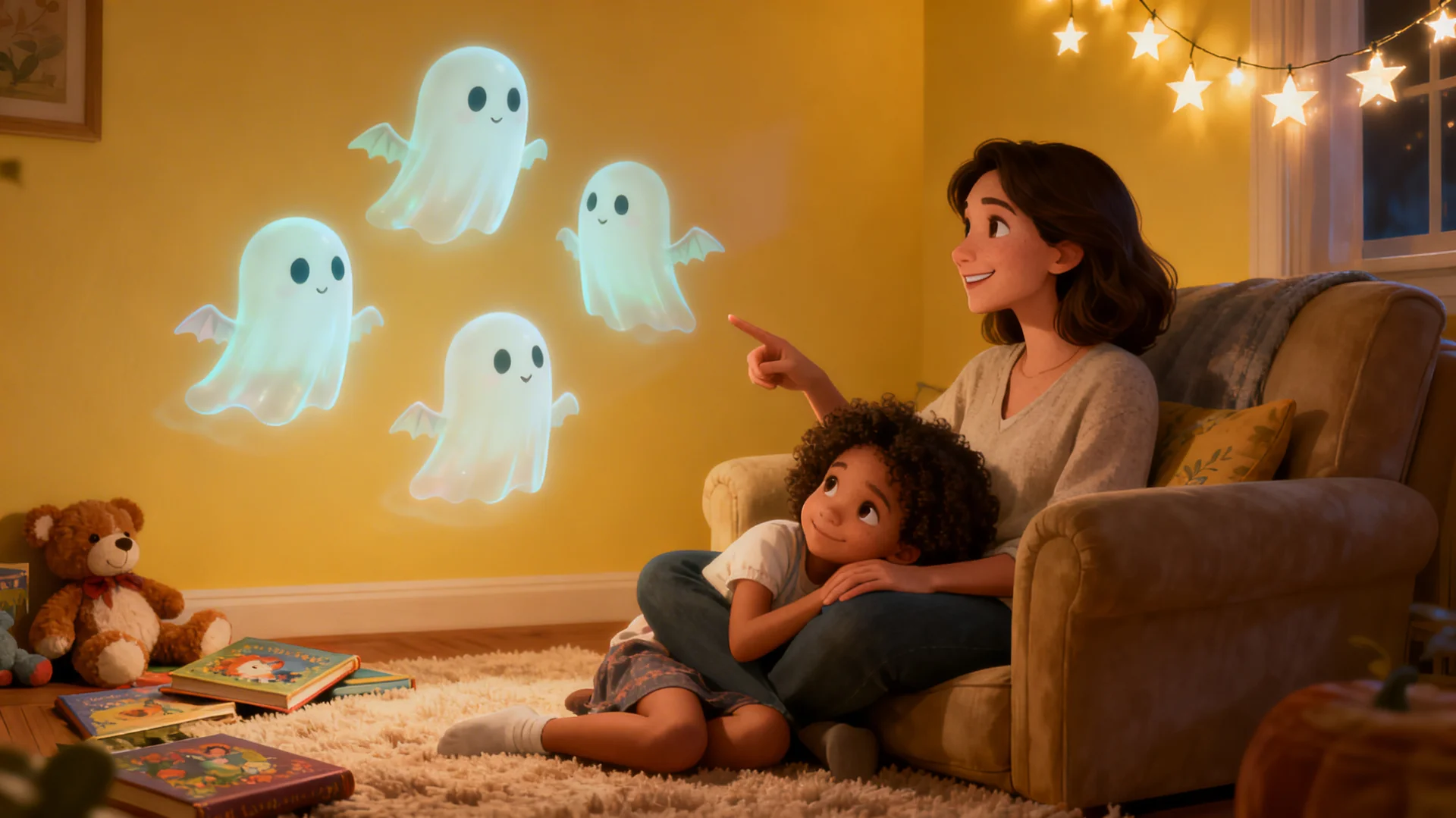
Why are children drawn to scary stories about ghost encounters? Psychologists suggest that "safe scares" allow children to explore the concept of fear within a controlled environment—usually the safety of a parent's lap or a brightly lit bedroom.
When we share horror stories for children, we aren't just telling tales of the supernatural; we are teaching them how to process anxiety. A well-constructed scary story for kids introduces a problem (a bump in the night), builds tension, and ultimately provides a resolution. This cycle helps kids understand that fear is a manageable emotion. Spooky children's stories serve as a "flight simulator" for the mind, where the stakes are imaginary, but the bravado they feel after finishing the story is very real.
Choosing the Right Chill: From Scary Stories for 5-Year-Olds to Ghost Stories for 10-Year-Olds
Not all ghosts are created equal. The level of "scare" must evolve with the child’s cognitive development to ensure the experience remains fun rather than traumatic.
Gentle Starts for Ages 5-7
For younger listeners, focus on "friendly" ghosts and happy endings. Use scary stories for 5-year-olds that emphasise mystery over threat. At this age, the thrill should always lead back to a comforting reality.
Advanced Mystery for Ages 8-10
As they mature, children crave more sophisticated narratives. Ghost stories for 10-year-olds (or scary stories for ten-year-olds) can feature complex plot twists and supernatural folklore. These kids' scary stories challenge their deductive reasoning and keep them on the edge of their seats.
For younger listeners, scary stories for 5-year-olds should emphasise the "silly" over the "scary." However, as they mature into the ghost stories for 10-year-olds bracket, children often crave more sophisticated narratives that challenge their deductive reasoning—think of the classic "The Green Ribbon" or folklore-based children's ghost stories.
Setting the Scene: Spooky Bedtime Stories vs. Ghost Story to Tell at a Sleepover
The environment dictates the intensity of the story. A short ghost story told under a duvet has a very different impact than one shared around a flickering flashlight during a party.
The Bedtime Ritual
When choosing spooky bedtime stories or horror bedtime stories, the goal is to spark imagination without triggering nightmares. Opt for ghost short stories that focus on mystery rather than threat. Scary bedtime stories for kids should ideally end with the "ghost" being something mundane, like a curtain blowing in the wind.
The Sleepover Challenge
This is where scary stories at sleepovers shine. A ghost story to tell at a sleepover can be a bit more intense, utilising "jump scares" or rhythmic repetition. Popular choices often include short, creepy ghost stories or the legendary short, scary ghost stories to tell in the dark, which rely heavily on oral performance and atmosphere.
Lightening the Mood: The Charm of Funny Ghost Stories
Sometimes, the best way to conquer fear is through laughter. Funny ghost stories and hilarious ghost stories are essential tools for sensitive children. By blending "spooky" elements with "silly" outcomes, you create funny, scary ghost stories that allow kids to enjoy Halloween short stories without the lingering dread. Humorous Halloween stories prove that even the most "terrifying" ghost can be just a little bit clumsy.
Beyond Reading: Creative Ghost Story Ideas and AI-Powered Writing for Kids
Once a child has consumed enough short kid-friendly ghost stories, they often want to create their own. Encouraging horror story writing is a fantastic way to improve literacy and emotional expression. However, the hardest part for a young author is often getting started or visualising their spooky characters.
This is where innovative tools like ChildrenBooks come into play. It is an excellent platform where parents and kids can collaborate to turn simple ghost story ideas into fully illustrated, professional-looking storybooks. By using AI to generate vivid scenes and characters, ChildrenBooks helps children see their "imaginary monsters" come to life in a way that is fun and empowering rather than frightening.
If your child is looking for a spark to start their first project on ChildrenBooks, try these haunted story ideas:
The Helpful Haunt
A ghost who tries to help a kid find their lost homework but keeps making a mess.
The Midnight Snack
A monster in the fridge who only wants to steal the leftover pizza.
The Echoing Library
Books that whisper their stories when the lights go out.
Using these scary story ideas along with an AI story generator helps children move from being passive listeners to active creators, giving them agency over the "monsters" they once feared.
Conclusion: Making Memories with Children's Ghost Story Traditions
Whether it is a Halloween short story shared once a year or a weekly tradition of short ghost stories, these narratives are about more than just ghosts. They are about the time spent together, the safety of a shared experience, and the thrill of the unknown. By carefully selecting ghost stories for kids that match their age and temperament, you are building a foundation of courage and a lifelong love for storytelling.
So, grab a flashlight, find a cosy corner, and dive into your next children's ghost story—the adventure is just beginning.